Registration Deadline:
Event Contact:
More Information:
Explore other Industry Opportunities:
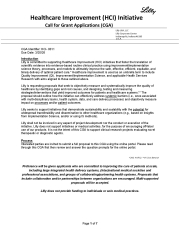
Lilly seeks proposals for healthcare improvement projects that reduce the time from biomarker-confirmed diagnosis of early Alzheimer's disease (MCI or mild dementia due to AD) to initiation of amyloid-targeting therapy through systematic process improvements and removal of healthcare system barriers.
Overview
- Funding of $400,000-600,000 per project available; multiple awards possible
- Institutional overhead/indirect costs limited to maximum 30% of total request
- 12-18 month project duration with quarterly progress reporting required
- Quarterly interim reports and meetings at initiative kick-off, closing, and ~12-months post-closing required
- Multi-supported proposals accepted; collaborations between organizations encouraged
- Sustainability and scalability with potential for widespread transferability emphasized
Priority Areas
- Reducing Time to Treatment Initiation: Decrease the time from biomarker confirmed diagnosis of MCI or mild dementia due to AD to initiation of amyloid-targeting therapy in appropriate patients according to approved prescribing information.
The initiative should address systemic barriers including:
- Safe and seamless care coordination among multi-disciplinary teams with timely referrals to dementia specialists
- Appropriate and timely patient selection for therapy (clinical diagnosis plus biomarker confirmation)
- Timely therapy initiation for appropriate patients per approved prescribing information
Eligibility & Requirements
Eligible Applicants
- Large integrated health delivery systems
- (Inter)national medical societies and professional associations
- Groups of collaborating/partnering health systems
- NOT eligible: Individuals or solo medical practices
Required Proposal Components
- Health System Practice Gaps: Description of gaps with objective data sources for baseline and outcome measurement; preference for proposals with completed baseline measurement
- Root Causes & Barriers: Description of processes/methods used to identify root causes using respected standard methods (IHI, AHRQ recommended); preference for evidence-based insights already developed
- Strategy/Interventions: Detailed description of planned interventions, rationale, implementation plan, and roles/responsibilities of all implementing individuals
- Outcomes Measures: Detailed objective measures using improvement/implementation science frameworks
- Primary: Time from biomarker-confirmed diagnosis to therapy initiation
- Secondary: % change in appropriate cognitive assessments/biomarker testing, APOE testing, specialist referrals, time from referral to therapy initiation
- Preference for analysis of biomarker testing type impact (PET vs. blood)
- Qualifications: Project leader and collaborator experience, certifications (Black Belt, Science of Improvement, implementation science), recognitions (Baldridge award), past HCI project examples
- Letters of Commitment: Required if not in direct control of data or personnel involved in implementing changes [Page 5]
- Communication/Publication Plan: Description of how results will be presented, published, or disseminated
- Sustainability Plan: Description of how positive outcomes will be sustained after funding ends, including continued measurement and 12-month post-initiative meeting
- Scalability Plan: Potential plans to apply effective practices within pilot system(s) and beyond; preference for creating generalizable insights and multi-system collaborations
Evaluation Criteria
- Proposals must use objective measures not already incentivized by federal programs (e.g., CMS quality programs)
- Realistic estimates of expected improvement magnitude preferred
- Incomplete proposals may not be forwarded to review committee
Timeline
- March 20, 2026: Application deadline via online portal
- Q2 2026: Ideal program launch
- 12-18 months: Project duration
How to Submit
- Submit proposal here by March 20, 2026
- Select "yes" for "Is this grant in response to a CGA" and select unique identifier: HCI-0011
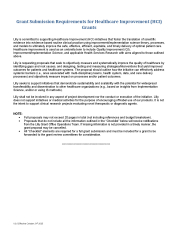
- Limit proposal length to 20 pages or less (not including references and budget)
- Include budget documentation per grant submission requirements guidance document in portal resource library
For proposal application and portal questions, contact Swapneeta Date, Assistant Director of Life Science Collaborations, lillygrantoffice@lilly.com, or Linda Battiato, Healthcare Improvement Hub.
Please note: Full RFP is attached in the "More Information" section of this page. Faculty and researchers interested in applying for these opportunities based on technologies developed or disclosed at Vanderbilt must submit their proposals through the CTTC.